By Daniel R. · Updated 2026-08-19 · 12 min read
The Real Reason Your ip-tv provider Feels Broken
Nothing kills a sports night faster than watching a live match freeze at the exact moment the play develops. If you have been through that with an ip-tv provider, you already know the deeper frustration: the channel list looks perfect, the price was low, but the actual viewing experience falls apart. Buffering, stuttering audio, dropped connections, and missing local channels make you question every subscription decision.
The screen above shows what most users see when a provider is overpromising capacity. The guide loads, the feed starts, then the spinner appears. The search query “ip-tv provider not working” exists because thousands of viewers run into the same three fixable problems. This article walks through those issues without vague filler, starting with the actual causes and ending with a step-by-step fix you can use today.
Three Mistakes That Make Any ip-tv provider Look Bad
1. Buying the Cheapest ip-tv Subscription Without a Trial
The cheapest ip-tv subscription almost always skips the infrastructure that keeps a stream stable. You may get 10,000 channels, but if the backend runs on overloaded servers, every prime-time match will buffer. A low price is not the issue by itself. The mistake is paying for three months or a year before testing the provider on your own network, during the hours you actually watch.
2. Using Wi-Fi for a 4K Sports Stream
Most buffering reports labelled “provider fault” are actually Wi-Fi congestion. An ip-tv provider for sports needs a stable, low-jitter connection, especially for 50fps or 60fps feeds. If your streaming box is two rooms away from the router, the provider cannot fix packet loss. Switching to a wired Ethernet connection often cuts buffering before you change any subscription.
3. Ignoring Where the Provider’s Servers Are Located
A provider may advertise a huge channel list, but if its delivery servers sit far from your region, every stream takes a longer path. That adds latency and increases the chance of mid-stream failures. Experienced users check whether a provider has regional server maps, not just a big list of channels. The difference shows up quickly in how to choose an ip-tv provider for live events.
Why Restarting the App and Buying Cheaper Plans Fail
When an ip-tv provider buffers, the first advice is to restart the app or router. That helps for a while, but it does not address server overselling, low-bitrate source feeds, or peering issues. If the provider’s backend cannot handle Sunday evening sports traffic, your local restart means nothing.
Buying a cheaper plan after trouble is another common trap. A lower tier often means fewer CDN connections, reduced bandwidth priority, or older server nodes. The result is the same buffering, now prepaid for longer. The usual quick fixes ignore the two variables that matter most: server capacity and your local path to that server.
Legal ambiguity also makes troubleshooting harder. Many users do not know where to buy ip-tv legally, so they stick with a weak provider because the setup “works enough.” But legal, properly licensed services have more incentive to maintain uptime and less incentive to hide their infrastructure.
What Experienced ip-tv provider Users Do Differently
Experienced users treat an ip-tv provider as an infrastructure decision, not a channel list. They test during peak sports hours, use a wired connection, and avoid prepaying for a full year until the service proves stable on their specific setup. They also look at the provider’s server locations and whether the service supports the devices they already own.
Another pattern: they read ip-tv provider reviews reddit threads with caution. Reddit can expose real downtime and billing issues, but it also attracts affiliate spam and competitor attacks. The useful threads mention specific channels, specific devices, and specific time windows. Generic “best provider” posts without those details rarely help.
✓ Benefits & Pros
Wired Ethernet or strong 5GHz Wi-Fi removes local buffering before provider changes.
A short trial on your own TV, box, and network reveals real capacity in 24 to 48 hours.
Checking server locations helps you avoid a provider that cannot deliver smooth sports in your region.
Legal or semi-legal services with proper infrastructure have reasons to maintain uptime.
✗ Limitations & Cons
Annual plans from unknown providers often lock you into capacity that disappears after big events.
A “no buffering” guarantee is not realistic if your home Wi-Fi is overloaded.
Cheapest ip-tv subscription may save money now but replace savings with lost match time.
Reddit reviews can be brigaded by resellers, hiding real uptime and server problems.
RECOMMENDED RESOURCE
ip-tv provider
Read independent network latency reviews and hardware specs.
Find Out More About ip-tv provider →
Notice the difference in the image above: a stable 4K sports feed on the left versus a pixelated feed on the right. Pixelation is not a “speed” problem; it is usually a compression or server-side issue from a weak ip-tv provider. When you see blocky artifacts during a football match, the provider is likely sending a low-bitrate source to hide bandwidth shortages.
Step-by-Step: Fix Buffering, Choice, and Legal Setup
Step 1: Test the Provider During Peak Sports Hours
Never judge an ip-tv provider at 2 p.m. on a Tuesday. Run the trial in the evening when live sports and entertainment traffic peaks. Watch a 4K sports feed for at least 30 minutes, then switch to a high-motion news channel and a movie channel. This reveals real capacity, not an idle demo.
Step 2: Plug the Streaming Device Directly into the Router
Before blaming the provider, run an Ethernet cable from your router to the streaming box, smart TV, or Android box. If the buffering disappears, the problem is local Wi-Fi, not the provider. If it persists on wired internet, the provider’s server path is the likely culprit.
Step 3: Look for Regional Server Details, Not Just Channel Count
A huge channel list is useless if the provider has no server near you. Ask support or search the provider name plus “server locations.” The best ip-tv provider 2026 guides often skip this part, but it is the difference between a smooth 60fps match and a slideshow. A provider with multiple regional nodes will handle traffic better than one central server.
Step 4: Avoid Prepaying for More Than One Month
A cheap annual plan feels like a win until the provider disappears in month two. Even stable services can lose upstream rights, especially for sports. Pay monthly or quarterly until the ip-tv provider for sports has proven itself on your setup for at least a full billing cycle. If the plan jumps in price later, you can leave without losing a year.
Step 5: Verify Where to Buy ip-tv Legally for Your Region
Legal clarity protects you from sudden shutdowns and missing channels. If you are asking where to buy ip-tv legally, check whether the provider lists a company address, offers support, and works with official app stores. Gray-market providers often vanish without notice, taking your prepaid balance with them.
Realistic Results After Switching to a Reliable ip-tv provider
A reliable ip-tv provider no buffering claim should be understood realistically: no provider can eliminate every buffer on a congested home network. But after switching to a wired connection, choosing a provider with regional servers, and testing during peak hours, most users see a drop from constant interruptions to an occasional brief pause.
You can expect stable 4K sports streams if your internet speed is at least 25–30 Mbps for the device and the provider’s server is not overloaded. Channel zapping should feel responsive, though not as instant as a fully local cable box. The bigger win is consistency: the stream should hold through an entire match without needing a restart.
Pitfalls That Still Trip Up ip-tv provider Users
The most common trap after fixing buffering is chasing every new “best ip-tv provider 2026” list. These lists often rank based on affiliate payout, not uptime. Another trap is judging quality by channel count. More channels can mean more dead feeds, more legal risk, and less bandwidth per channel.
Users also fall for ip-tv provider reviews reddit threads that promise no buffering but omit the device, region, and time of day. If a Reddit review does not mention whether they used Wi-Fi or Ethernet, it is not useful. Ignore any review that sounds like a sales page. Finally, do not use a provider that forces you onto an unknown media player app. Stick to well-known IPTV players you can update independently.
ip-tv provider vs Cable TV: What Works and What Does Not
Review up-to-date regional server maps and infrastructure.
View the ip-tv provider Platform →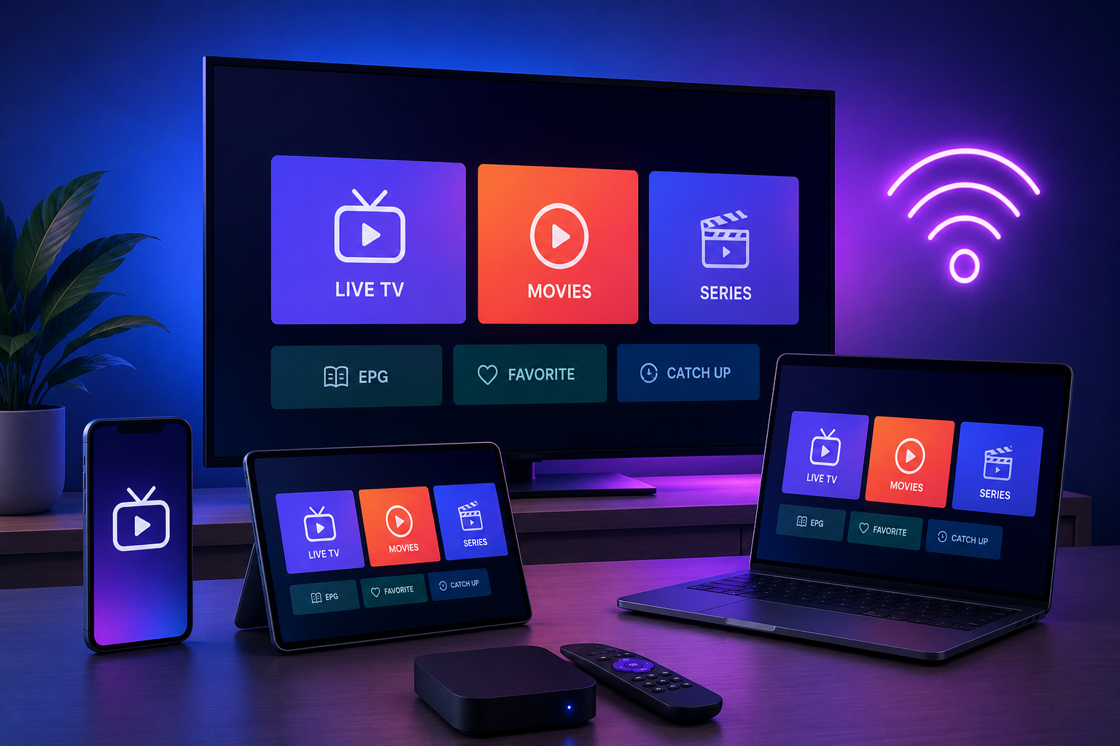
In the photo above, the router and streaming box are connected directly via Ethernet. That single change removes the most common local network bottleneck. If you can run a cable, do it before changing providers. If Ethernet is not possible, place the router and box in the same room and switch the box to a 5GHz band with low interference.
Final Fix: Treat Your ip-tv provider as a Test, Not a Subscription
The fastest way to stop buffering is not to search endlessly for the perfect provider. It is to change how you evaluate one. Run a short wired test during the hours you actually watch, ask about server locations, and refuse to prepay for a year. That process filters out the oversold, underpowered services almost immediately.
Once you have a reliable ip-tv provider with no buffering on your setup, the comparison with cable TV becomes clearer. You get more flexibility and often more sports coverage for less money, but you accept some configuration responsibility. That trade-off works best when the provider’s infrastructure is solid enough to keep the stream alive without your constant tinkering.
Featured Streaming Selection:
Learn more about ip-tv provider →Affiliate Disclosure: Clicking this secure link verified by our network supports our team through standard partnership terms at zero extra cost to your invoice.
Frequently Asked Questions
This article contains affiliate links. Our editorial analysis remains independent.